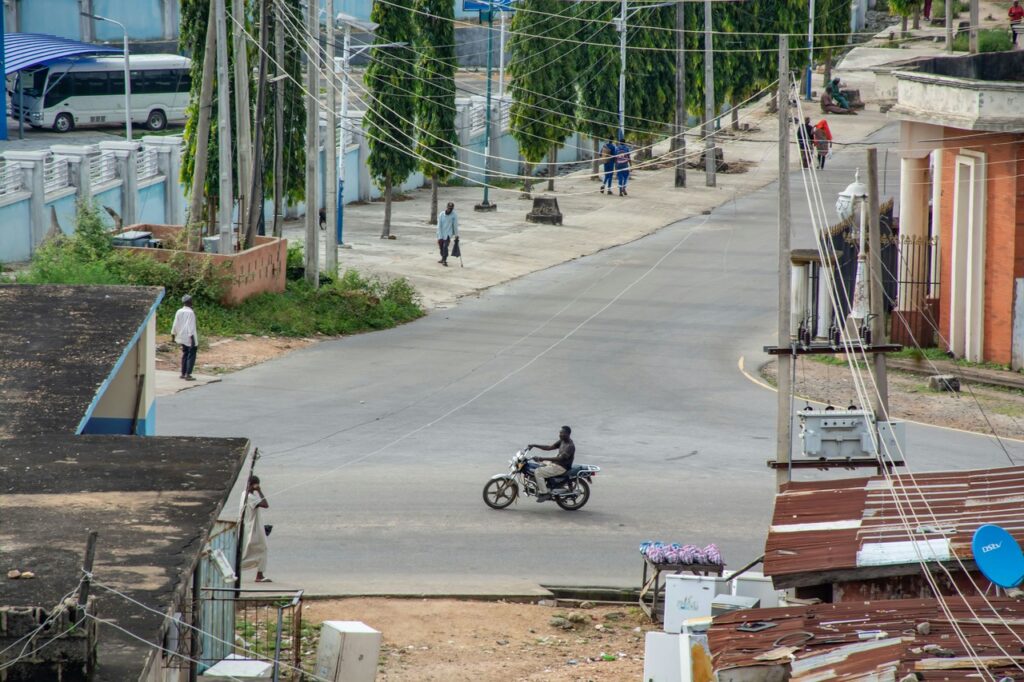
The new Nigerian Public Works Minister David Umahi, has advocated for the choice of rigid pavements in place of flexible pavements for road construction since they’re too fragile in Nigeria. This strategy could be advantageous due to the current conditions in Nigeria in which flexible pavements become less durable as time passes.
Flexible pavements are constructed out of concrete reinforced, whereas asphalt pavements that are flexible consist of of asphalt or the tarmac.
Asphalt roads constitute the main roads in Nigeria and are evident in the Lagos-Ibadan and Port-Harcourt-Enugu Expressways, the Lokoja Abuja Expressway and the Abuja-Kaduna Expressway along with a host of other routes. Concrete roads are the road known as Kabba Obajana, which is located situated in Kogi State and the Apapa-Oshodi Road that is located in Lagos State.
Infrastructure for roads is crucial to an economy that is modern. The growth of the economy depends on accessibility and mobility for lasting growth.
As an engineer professor who’s researched the application of reinforced concrete as well as asphalt-based pavements for Nigerian roads, I am able to help clarify the issues caused by the Minister’s decision.
The decision between an expensive additional service or a lower-cost discount service is an important design decision the choice of solution should be able to accommodate both cost-saving demands and considerations of political.
There is currently an inconclusive data that can show what type of pavement is more suitable in Nigeria either flexible as well as concrete.
A Comparison of Rigid And Flexible Pavements
It is usually costlier and harder to set up and maintain. It’s made from cement concrete. It consists of the base course, a sub-base as well as a sub-base course. Flexible asphalt is more prone to break when stressed due to its flexibility (i.e. the capacity to resist deformation when under stress) however, rigid pavements have a greater flexural strength. This means that every layer is resistant to deformation during load bending and is not affected by the materials.
Flexible pavements are made to flex and alter depending on external influences like traffic load. They are greener than rigid pavements and have lower cost of construction; maintenance typically occurs every 10 to 15 years. While periodic maintenance and inspections are possible, the work-related tasks tend to be straightforward.
Although flexible pavements are less expensive in initial cost, maintenance costs can be higher.
Rigid asphalt is more expensive in initial price, but has it is less expensive to maintain throughout its life.
In comparison to reinforced concrete pavement structures asphalt pavements generally are smaller in their base as opposed to reinforced concrete asphalt, which is more extensive in its base. The base is the substance that lies beneath the structure of the pavement.
Flexible asphalt usually lasts for 10-15 years. While rigid asphalt can last for 25 to 30 years.
Flexible pavements are more accessible as compared to rigid pavements. If water remains within the asphalt structure of the asphalt for an extended duration, it can increase the likelihood of failure and leads to a decline in the basis modulus which reduces the efficiency and effectiveness that the asphalt. The primary modulus is the relationship between the strain within an elastic support system and the stress or deflection of the support board when it is in equilibrium.
With its bright hue, the rigid sidewalks are more secure for walking on in the dark.
Even though extreme weather conditions for example, high temperatures could cause damage to flexible pavements they are not able to affect the performance of the rigid pavement because changes in temperature on flexible pavements will affect their structural properties, which includes tension-strain problems.
Flexible asphalt generally has high levels of noise pollution while rigid asphalt typically has lower amounts.
The Criteria For Making Decisions
The selection of a surface is contingent on its longevity and the cost of materials like beginning construction costs, ongoing repair and maintenance costs, as well as all costs that are associated with the environment, such as energy emissions or consumption and energy use.
A cost-of-living analysis must be done prior to deciding on the pavement material to ensure to make the best choice.
The roads that are well-constructed must offer satisfactory quality of service as well as acceptable protection while carrying out their duties, and they should also be in line with local standards and values which may differ by location. However things like the cost, environmental impact and aesthetics need to be considered carefully when making decisions.
Paved Asphalt (flexible asphalt) offers the benefits of lower initial costs for construction as well as a short maintenance and construction time and a quick repairs. Also, it reduces waste since it is recyclable. It can be repaired in a short time, as well as its characteristics reduce noise. Asphalt pavements, however, only last a short time They require regular maintenance, and cannot be easily traversed for heavy vehicle. Thus, they are most suitable for roads with little traffic for example, rural roads as well as residential ones. Additionally that the process of making asphalt can increase carbon emissions which are harmful to the natural environment.
Concrete asphalt usually has greater cost of construction and takes longer durations due to maintenance needs. Repair and formation of holes take longer, which means long maintenance time. Concrete pavements, however, have longer service lives, less cost of maintenance, excellent durability with a high load capacity and less carbon emissions from cement manufacturing and less prone to create potholes. This means that they are able to be utilized in areas with high traffic like highways, ports airports, and ports more effectively as well as reducing the carbon emission at the their source.